The Library
Our library is a warm and inviting space at the heart of Finham Park. It’s always buzzing with activity—whether students are reading, researching, studying, or simply enjoying a quiet moment. The library is open throughout the day, as well as before and after school, so there’s always time to drop in.
We aim to:
- Support students and staff with up-to-date, easy-to-find resources
- Provide a calm and positive place to learn and work
- Encourage a love of reading and inspire curiosity about the world
We also have our own Library website where you can explore everything we offer. Just click the link below to find out more!
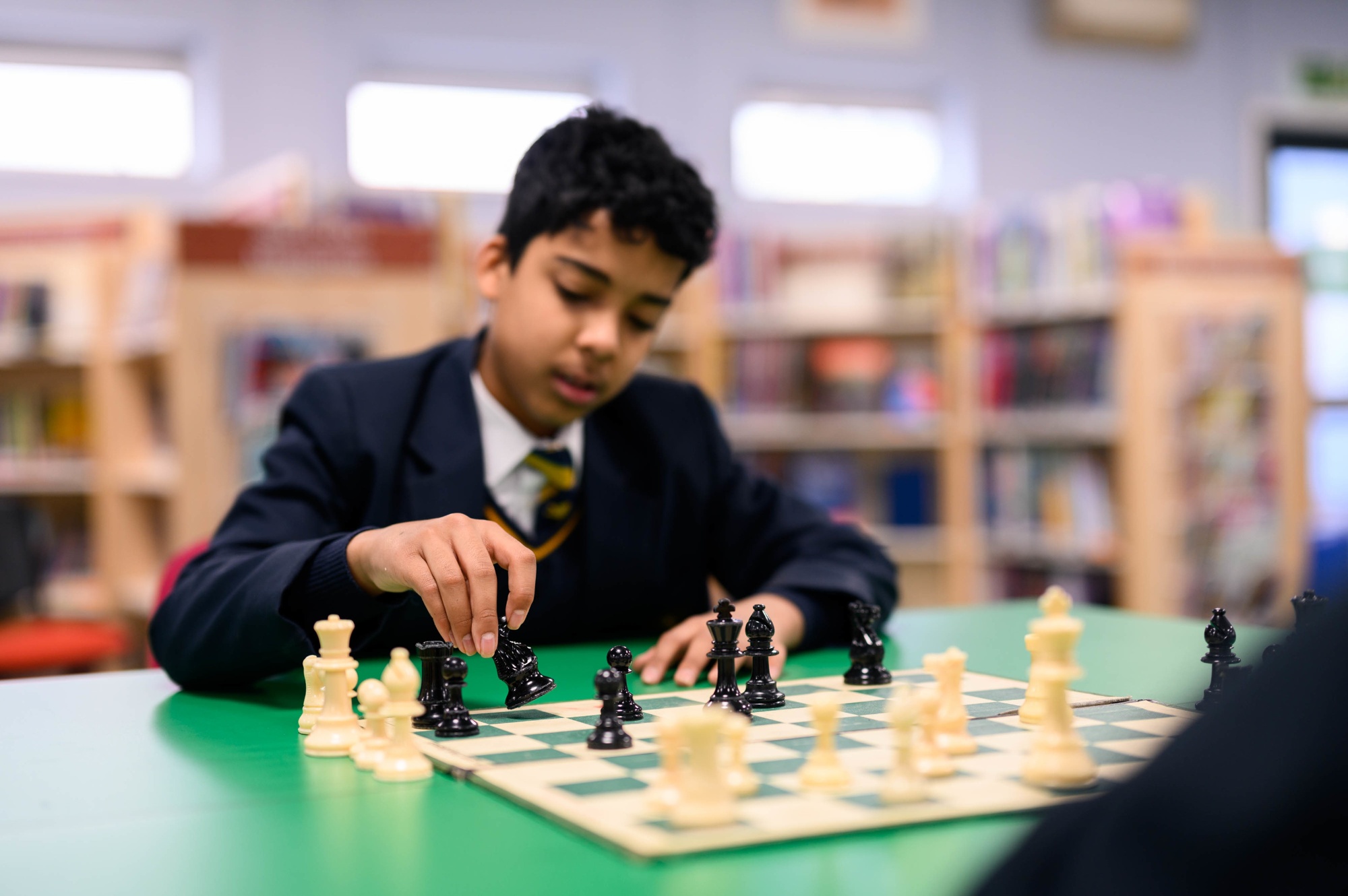
All students can use the library during their free time. Breaks and lunchtimes will find them browsing and reading books, magazines or newspapers, playing chess, Scrabble and other word games. Before and after school is the ideal time for students to start or complete homework and the library staff are always on hand to help with research.
Sixth form students use the library regularly during their free periods for work and research, and we have extra laptops available for them to use in the library. There are 16 single study carrels available in a silent work area as well as numerous work tables in the body of the library.
What do the Students Say about reading?
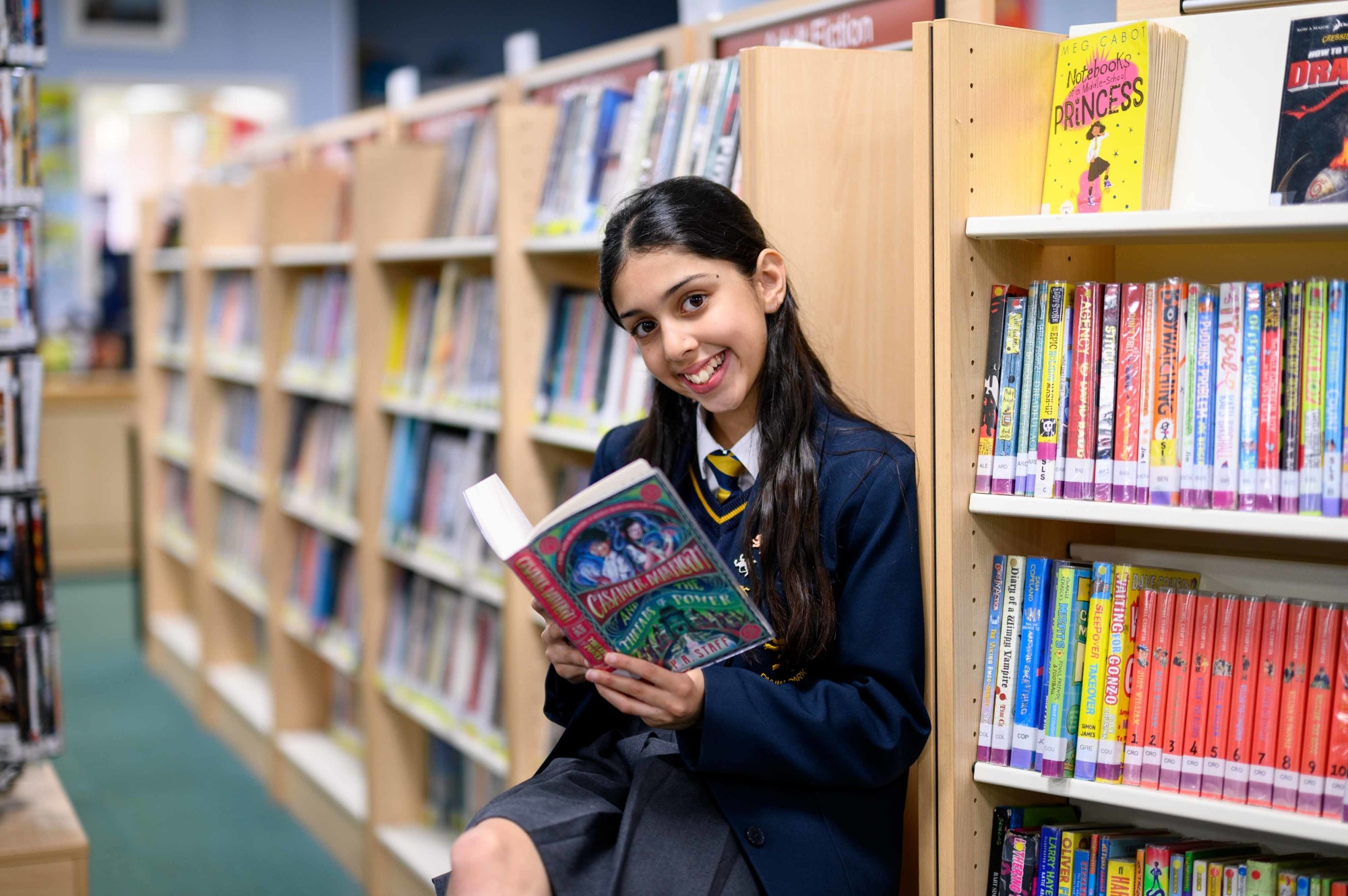
“I love reading, and I don't think that I could enjoy it any more.” (Y8 student)
Library Opening Times
| Monday | 8:00am - 4:30pm |
| Tuesday | 8:00am - 4:30pm |
| Wednesday | 8:00am - 4:00pm |
| Thursday | 8:00am - 4:00pm |
| Friday | 8:00am - 3:00pm
(Not open after school) |
We also take a team to the regional heat of the...
Which has an international following with competing teams as far away as China, and which has been described by a guest author as "a really good pub quiz without the beer".
Encouraging a love of reading
The English department runs fortnightly library lessons with Year 7 and Year 8, focusing on a whole class guided reading task followed by a chance for students to read independently and reflect on what they’ve read.
The paired reading that runs as literacy support in the PLC is followed in the library and students are able to use their teachers, the library staff and Sixth Form learning mentors to help guide their reading. All mentors are equipped with a copy of our Reading Bookmarks to help facilitate thoughtful and probing questions.
In addition to the weekly reading logs students complete as their home learning in Year 7 and Year 8, the school offers engaging author visits and a wide-ranging diet of fiction and non-fiction not just in English, but across the school.
The benefits of reading for pleasure and for academic purposes
- Reading for pleasure is more important for children's cognitive development than their parents' level of education and is a more powerful factor in life achievement than socio-economic background.
- There is a difference in reading performance equivalent to just over a year's schooling between young people who never read for enjoyment and those who read for up to 30 minutes per day.
- The frequency of reading for pleasure at age 42 is linked to vocabulary skills: those who read every day at 42 have an advantage of 4 percentage points in their vocabulary over those who do not read as frequently
- We are blurring the lines between reading for pleasure and reading for an academic purpose. When students read for pleasure, they are supporting their academic development and we want them to be aware of this!

How do we encourage reading for pleasure?
- A well stocked and attractive library with dedicated staff
- Reading ages of all students are on PARS
- Reading support in the PLC for year 7 students who require literacy catch up
- Staff book group
- Suggested reading sessions in mentor time now linked to the ‘Readathon’ challenge
- Reading lists for different age groups, genders, interests and genres
- Fortnightly dedicated library lessons in KS3
- Reading ‘homework’ in year 7 and 8 (nothing else is set)
- High profile World Book Day events and assemblies including the amazing book swap organised by PE!
- Termly reading prizes
- World Class Essay Competition
- Supportive bookmarks to help parents with reading at home.
- Every college has a dedicated day for reading
'Pleasure reading builds reading comprehension, increases background knowledge (which is useful in all content areas), increases student vocabulary skills, and has been shown to increase our understanding of human behaviour and help us to empathise with others' (Murphy, 2013)
'Reciprocal Reading'–FFT Intervention program
Some students in Year 9 will follow this pathway to support the wider curriculum and improve their ability to access it. Developing a student's reading fluency is more than just teaching word recognition. Language comprehension must also be added to develop a child into a skilled reader.
Comprehension strategies are the actions and processes that skilled readers use, usually unconsciously, to understand a text. They include:
- Activating and using background knowledge
- Generating and asking questions
- Making predictions
- Visualising
- Monitoring comprehension
- Summarising
It is better to spend time developing compression buy increasing and activating pupils' knowledge than by teaching reading comprehension strategies. Pupils' knowledge can be increased by wide reading across generic and subjects, by focussing on the knowledge they need to understand specific texts.


